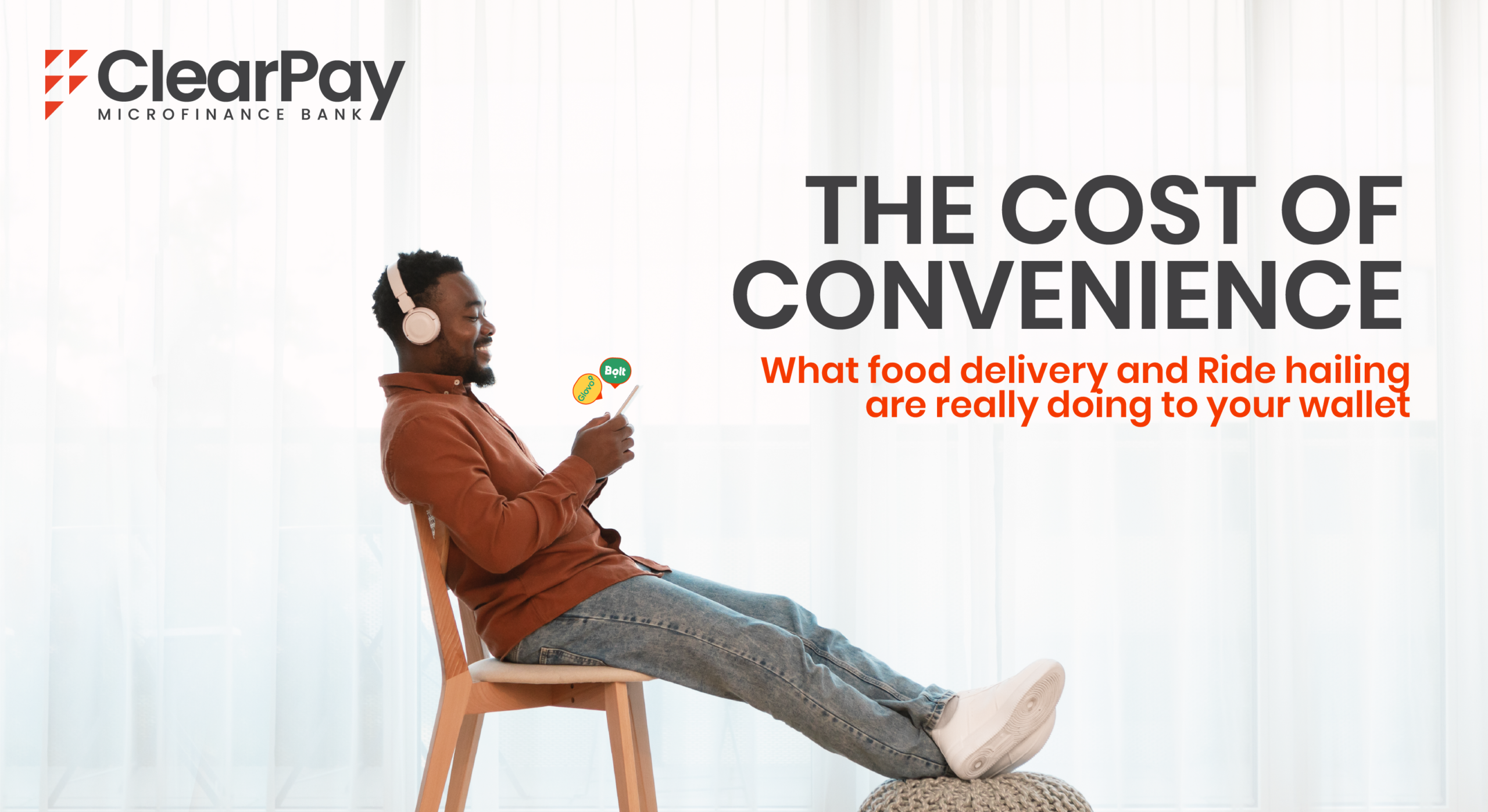
Let’s be honest, convenience has become our love language.
Why cook when food can arrive at your door in 30 minutes? Why wait for a bus when a ride is just one tap away? In this present day, food delivery apps and ride-hailing services have quietly become part of our everyday routine. They save time, reduce stress, and make life easier.
But there’s a question we don’t ask often enough: what is convenience really costing us?
Not in theory but in actual naira.
Convenience spending doesn’t usually feel expensive in the moment. A ₦3,500 food order here. A ₦4,000 ride there. Maybe another ride because the sun is too hot or the rain started unexpectedly. Each decision feels reasonable, but when you zoom out at the end of the month, your account balance tells a different story.
Food delivery is one of the biggest silent spenders. The price of the meal is only part of the bill. Delivery fees, service charges, and surge pricing all pile up quietly. That meal you could have prepared at home for ₦2,000 suddenly costs ₦6,000, and because it feels like a small treat, you do it again the next day. Before long, eating out becomes your default, not the exception.
Ride hailing works the same way. It starts as an occasional convenience but slowly turns into a habit. Short distances you could walk or take public transport for are replaced with quick rides “just this once.” Then surge pricing kicks in during rush hour or bad weather, and a journey that should cost ₦2,500 suddenly costs ₦5,000. You pay it anyway because you’re already late, tired, or just not in the mood to stress.
The real problem isn’t that these services exist. They solve real problems and make modern life easier. The issue is how easily convenience turns into unconscious spending. When payments are just taps and notifications, money stops feeling like money. It becomes numbers on a screen, leaving your account quietly.
Over time, this kind of spending eats into money that could have gone toward savings, investments, or even things you care about long-term. Many people struggle to save not because they don’t earn enough, but because convenience keeps taking small bites out of their income every day.
This doesn’t mean you need to cancel every app or swear off comfort. The goal isn’t to suffer, it’s to be intentional. Convenience should be a choice, not a reflex. Cooking at home a few more times a week, grouping errands to reduce rides, or setting a monthly “convenience budget” can make a noticeable difference without drastically changing your lifestyle.
It also helps to actually see where your money is going. When you track spending even casually — patterns become obvious. You start to notice how much convenience is costing you, and once you see it, you can’t unsee it. That awareness alone can save you money.
At the end of the day, convenience is not the enemy. Unchecked convenience is. When every solution to discomfort comes with a price tag, your wallet ends up working harder than you do.
So, the next time you’re about to order food because you’re tired, or book a ride because it’s easier, pause for a second. Ask yourself if you’re paying for convenience or paying with your future financial peace.
Sometimes, the most powerful money decision isn’t earning more. It’s simply choosing when convenience is worth the cost.
Don’t mention.